CHAPTER 01 / 06
Required Equipment and Materials
On this page
This chapter outlines the equipment and materials required to roast green coffee beans using microwave radiation.
Equipment and Materials Checklist
- Microwave oven
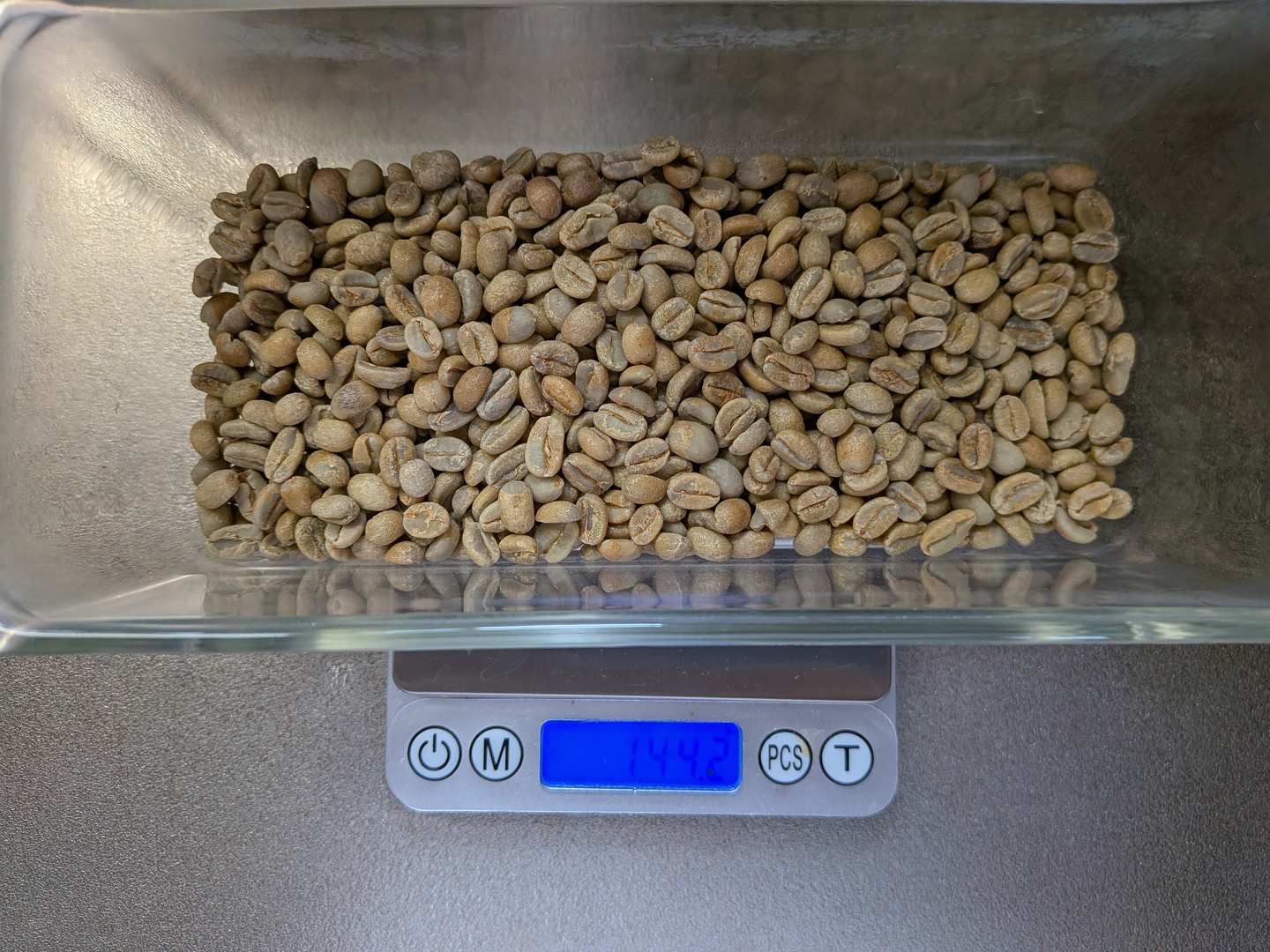
- Green coffee beans
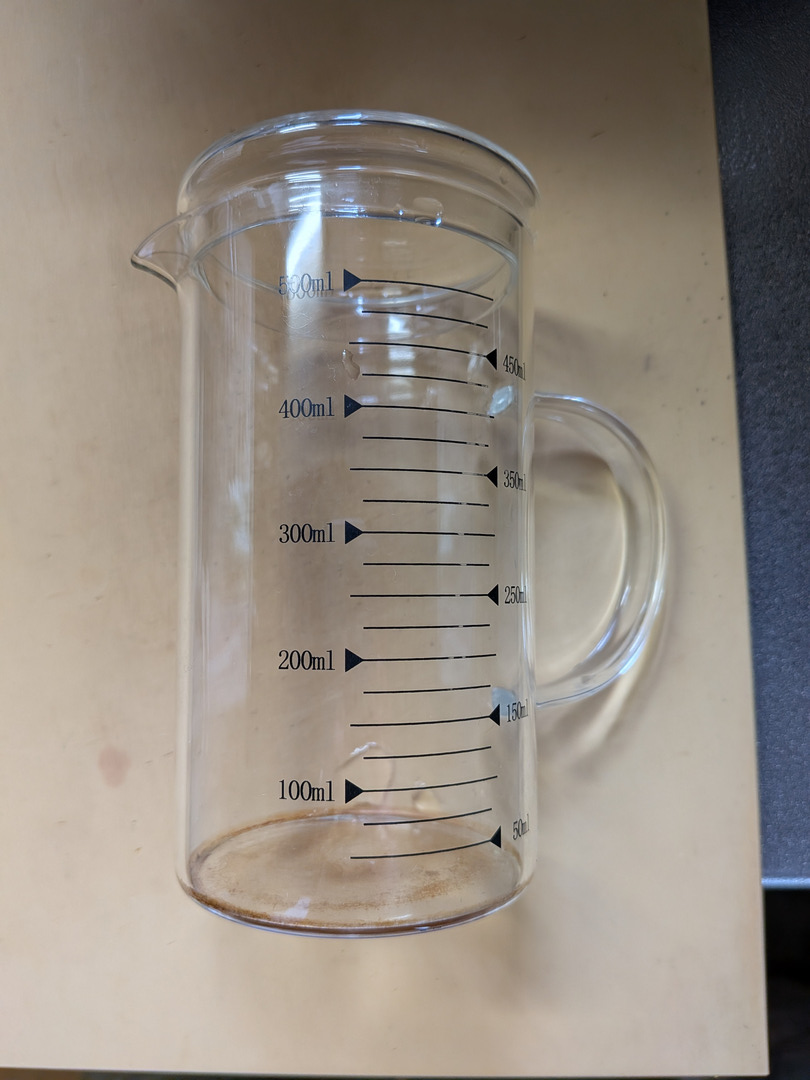
- Heat-resistant borosilicate glass container (cylindrical type)
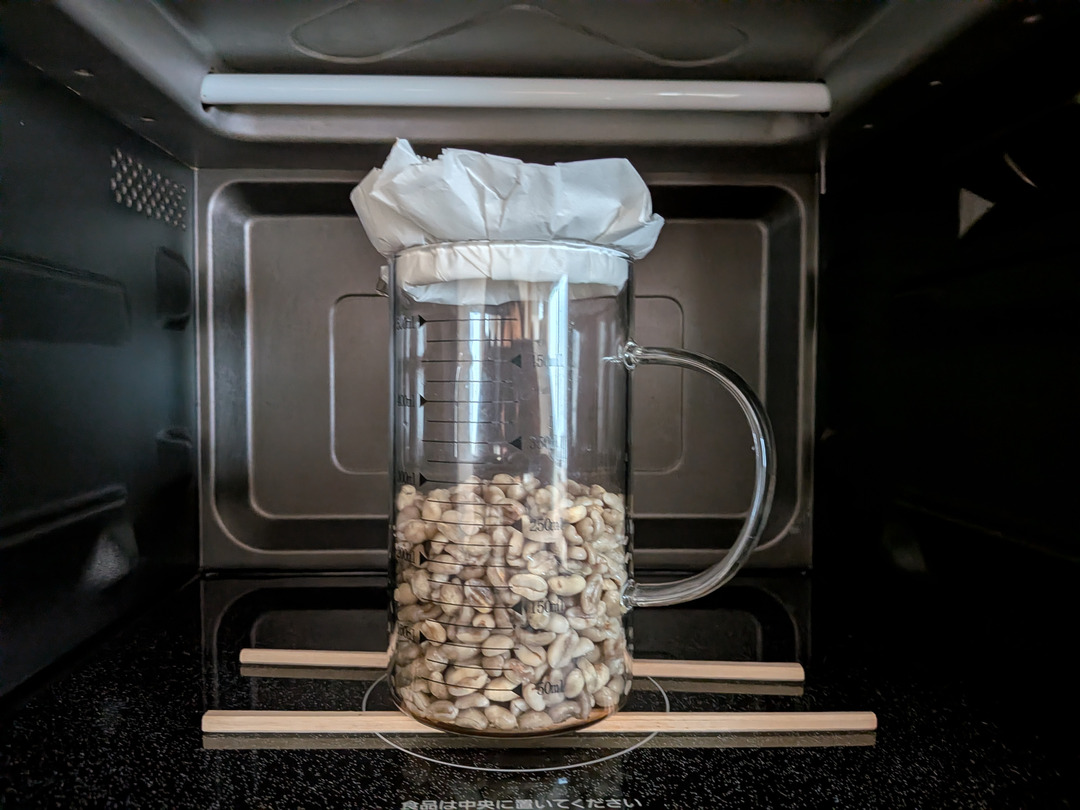
- Wooden disposable chopsticks (bamboo is strictly prohibited)
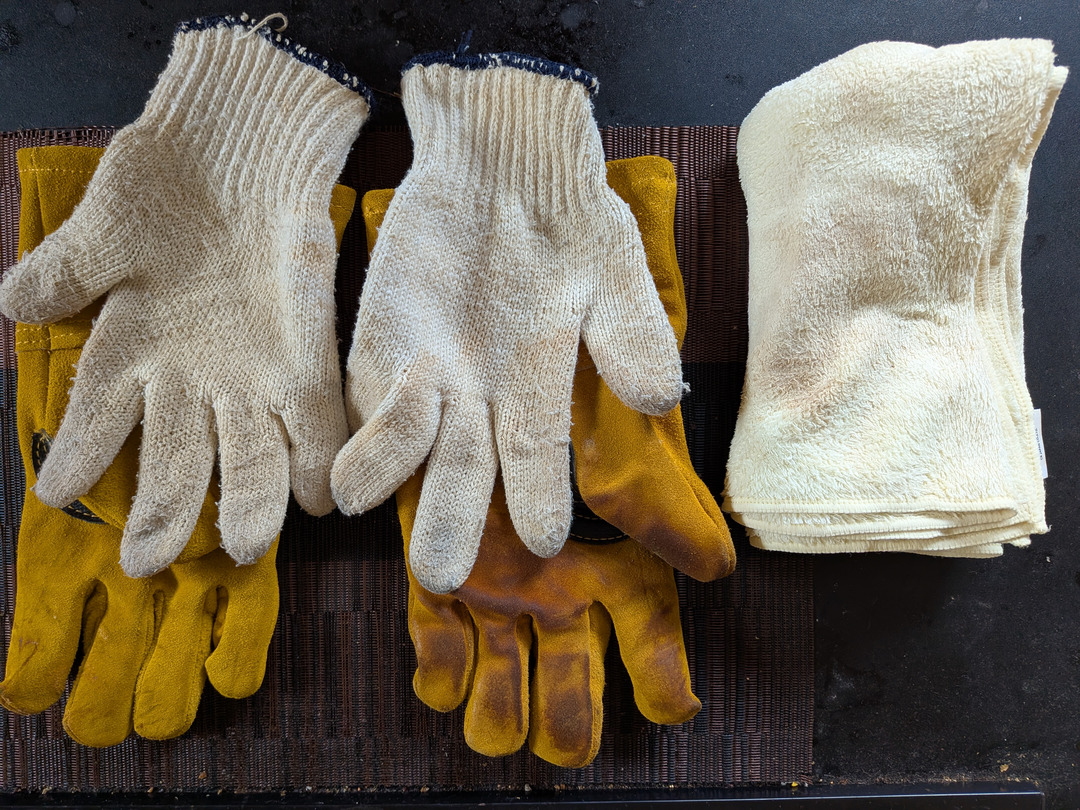
- Heat-resistant gloves
- Heavy towel
1. Microwave Oven
Both flatbed and turntable microwave ovens can be used.
However, because the microwave distribution and exposure patterns differ between the two, the physical behavior of the beans during roasting will vary.
This manual is written based on the author’s validation environment: a Panasonic flatbed microwave oven.
The fundamental procedure remains the same when using a turntable model, but heating times and agitation timings should be adjusted as necessary.
Caution
Use only the pure "Microwave" function. Do not use the heater-based "Oven" or "Convection" functions.
2. Green Coffee Beans
Given the output characteristics of standard home microwave ovens, the recommended batch size is approximately 150g (up to about 200g maximum). Loading an excessive batch can easily cause uneven heating.
3. Heat-Resistant Borosilicate Glass Container (Cylindrical Type)
Because roasting is carried out via microwave radiation, the container must satisfy the following criteria:
- Microwave Transparency: The relative permittivity must be sufficiently low (borosilicate glass exhibits extremely low loss, typically between 4.3 and 4.8).
- Thermal Resistance: The container must reliably withstand the peak temperature of the beans upon roast completion (approximately 230°C). Borosilicate glass has a working temperature limit of 450°C to 500°C.
- Thermal Shock Resistance: Must withstand rapid temperature shifts (rated thermal shock resistance of 120°C to 150°C or higher). The temperature rise during roasting is gradual, making it safe for practical use.
To satisfy both "microwave transparency" and "high-temperature endurance above 230°C," you must use a container made of heat-resistant borosilicate glass. Regular soda-lime glass containers present a severe risk of shattering and must never be used.
4. Recommended Container Geometry
Any borosilicate container capable of holding 150g to 200g of green beans can theoretically be used. However, because this manual employs a technique that monitors and controls roast progression based on visual volume changes, a graduated cylindrical shape (similar to a measuring cylinder) is strongly recommended.
Because the container reaches temperatures exceeding 200°C, choosing a container equipped with a handle is critical for operational safety.
Additionally, a lid is used to promote and sustain heat retention as bean temperature rises.
Ensure the cylinder has a pour spout so that the vessel is never hermetically sealed during roasting.
5. Wooden Disposable Chopsticks (Bamboo is Prohibited)
In flatbed microwaves, microwaves are intensely focused toward the bottom-center of the cavity. If the container sits directly on the microwave floor, only the beans at the bottom will overheat, exposing the floor surface to extreme thermal stress.
Placing dry wooden chopsticks underneath the container elevates it off the bottom floor, effectively preventing localized scorching and protecting the appliance from thermal damage.
The pedestal must be made of dry wood that absorbs virtually no microwaves (exhibiting an extremely low dielectric loss factor).
Important Notes
- A pedestal is not required when using a turntable microwave oven.
- Do not use chopsticks that have been painted, coated, or chemically treated.
- Never use bamboo chopsticks. Under high heat, bamboo exudes natural oils and pitch, which cause scorching, fire hazards, and unpleasant odors. Always use untreated, dry wooden chopsticks.
6. Heat-Resistant Gloves
During roasting, the coffee beans and the glass container will reach temperatures exceeding 200°C. In addition, high-temperature steam near 100°C vents from the container's opening.
The roasting workflow requires repeatedly removing the container from the oven, shaking it vigorously to agitate the beans, and returning it to the cavity. Reliable heat-resistant gloves are essential to prevent burns. Choose gloves that provide adequate thermal insulation without compromising dexterity.
7. Heavy Protective Towel
Even when wearing heat-resistant gloves, prolonged exposure to direct steam and conducted heat from the top of the container is dangerous. When shaking and agitating the container, place a heavy towel over the top opening to shield your hands and face from escaping steam and radiant heat.